HVAC Installation Cost: Everything You Need to Know Before Buying
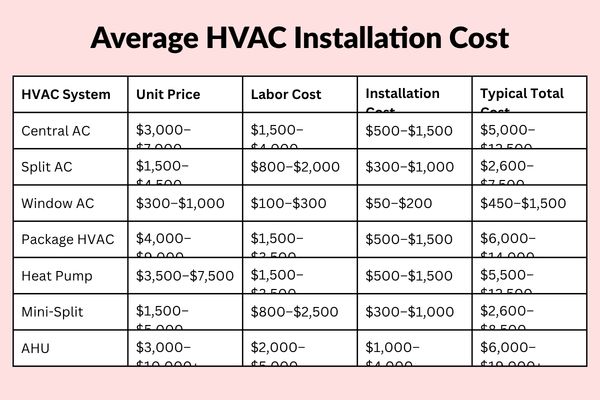
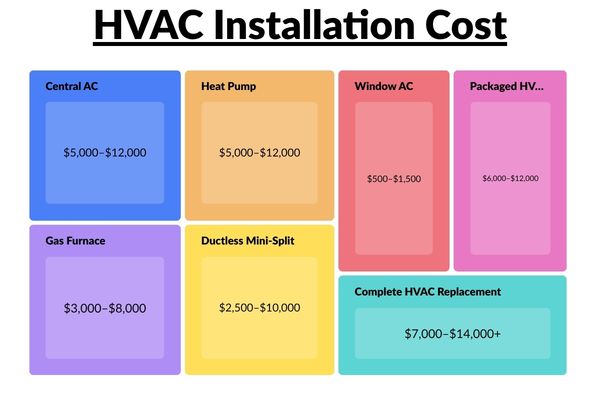
Planning an HVAC system for your home is a major investment, and understanding the HVAC installation cost before starting the project can help you make a smarter financial decision. Across the United States, homeowners can typically expect to pay around $5,000 to $12,500 or more for a complete HVAC installation, depending on the type and size of the system and the complexity of the installation.
However, the actual HVAC installation cost can vary significantly from one home to another. Equipment type, home size, labor rates, ductwork requirements, installation complexity, and energy efficiency all play an important role in determining the final price. Choosing a higher-efficiency system may cost more upfront, but it can potentially reduce monthly energy bills over the long term.
Knowing what factors affect HVAC installation pricing allows you to create a realistic budget, compare contractor estimates, and avoid paying more than necessary. In this guide, we’ll break down the major costs involved in HVAC installation so you can understand what to expect and choose the right system for your home and budget.
How Much Does HVAC Installation Cost in 2026
The HVAC installation cost for a new heating and cooling system can range from about $5,000 to $15,000 or more in 2026, depending on the system type, home size, equipment efficiency, installation complexity, and local labor rates. A basic replacement may cost less, while a high-efficiency or more complex HVAC system can push the total significantly higher.
So, how much does HVAC installation cost for a typical U.S. home? For a complete heating and cooling replacement, homeowners commonly spend around $7,000 to $14,000, although actual prices vary widely by project.
The final price is not determined by the equipment alone. Factors such as SEER2 efficiency, system size, AFUE rating, ductwork, electrical upgrades, permits, refrigerant requirements, and labor can all affect your total installation bill.
What Is the Average HVAC Installation Cost?
The average HVAC installation cost in the U.S. is typically around $7,000 to $14,000 for a complete heating and cooling system replacement in 2026. However, there is no single price that applies to every home. A smaller, straightforward installation may cost considerably less, while a large home with high-efficiency equipment, new ductwork, or electrical upgrades can push the total above $15,000.
For homeowners comparing expected HVAC prices in 2026, the type of system and equipment quality are two of the biggest factors.
HVAC Installation Labor Cost
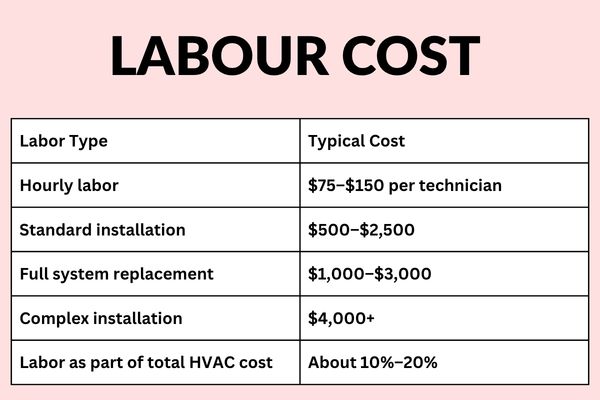
Labor is a major part of your total HVAC installation cost. For a standard system replacement, homeowners typically pay around $500 to $2,500 for labor, while some contractors charge $75 to $150 per hour per technician.
For a complete HVAC system replacement, labor commonly falls between $1,000 and $3,000, depending on the size and complexity of the job. In more difficult installations, labor can exceed $4,000, especially when new ductwork, electrical upgrades, or difficult equipment removal is required.
HVAC Installation Cost Per Square Foot
The HVAC installation cost per square foot can be a useful starting point when estimating the budget for a new heating and cooling system. In 2026, a rough planning range of $15 to $25 per square foot can be used for a complete HVAC installation, although actual costs can vary substantially depending on the system type, home layout, climate, equipment efficiency, ductwork, and local labor rates.
What Affects HVAC Installation Labor Cost?
Key Factors That Impact Your Total HVAC Installation Cost
- Type of HVAC system: A standard split system is usually easier to install than a multi-zone heat pump or ductless system.
- Home accessibility: Tight attics, crawl spaces, rooftops, and difficult-to-reach equipment can increase installation time.
- Ductwork: If your existing ducts need major repairs, replacement, or new installation, expect higher labor costs.
- Electrical work: An electrical panel upgrade or new wiring can add to the total installation price.
- Location: HVAC labor rates are generally higher in major cities and areas with a higher cost of living.
- Old system removal: Removing and disposing of existing equipment can add extra labor charges.
- Installation complexity: A straightforward replacement usually costs less than a completely new HVAC installation.
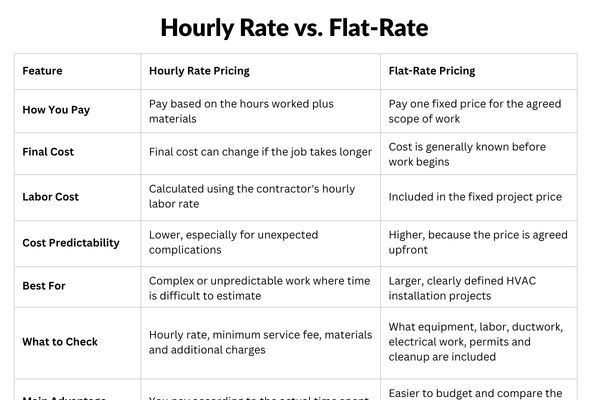
Hourly Rate vs. Flat-Rate Pricing
typical HVAC Sizes by home size:
- 1.5 to 2.0 tons (800–1,200 sq. ft.): Suitable for smaller homes and generally costs less to purchase and install.
- 2.5 to 3.0 tons (1,200–1,800 sq. ft.): A common range for many average-sized homes.
- 4.0 to 5.0 tons (2,000+ sq. ft.): Designed for larger homes and typically requires more equipment, airflow, and installation work.
Important: Square footage alone should not determine your HVAC size. Factors such as insulation, ceiling height, climate, windows, and the home’s layout also affect the required capacity. A professional Manual J load calculation can help determine the correct system size.
Equipment Costs
The HVAC equipment itself usually makes up the largest portion of the total installation price. In many standard installations, equipment accounts for approximately 50% to 60% of the total quote.
The equipment cost may include:
- Outdoor condenser or heat pump
- Furnace or indoor air handler
- Thermostat
- Refrigerant lines and fittings
- Electrical components and other
- installation materials
- Higher-capacity or energy-efficient equipment generally costs more upfront. However, choosing an efficient system can help reduce energy consumption and lower your operating costs over time.
Why Labor Matters: Skipping professional installation to cut
the HVAC installation cost can lead to improper refrigerant charge, duct
leakage, reduced system lifespan, and voided manufacturer warranties.
How to Lower Your HVAC Installation Cost
Replacing an HVAC system can be a significant expense, but there are several ways to keep your HVAC installation cost under control. A little planning and price comparison can help you get a reliable system without spending more than necessary.
1. Get at Least Three Written Quotes
Replacing an HVAC system can be a significant expense, but there are several ways to keep your HVAC installation cost under control. A little planning and price comparison can help you get a reliable system without spending more than necessary.
Ask at least three licensed HVAC contractors for detailed written estimates. Compare the equipment, labor, permits, warranty, and any additional charges in each quote. This makes it easier to identify a fair price and avoid paying for unnecessary work.
2. Schedule Installation During the Off-Season
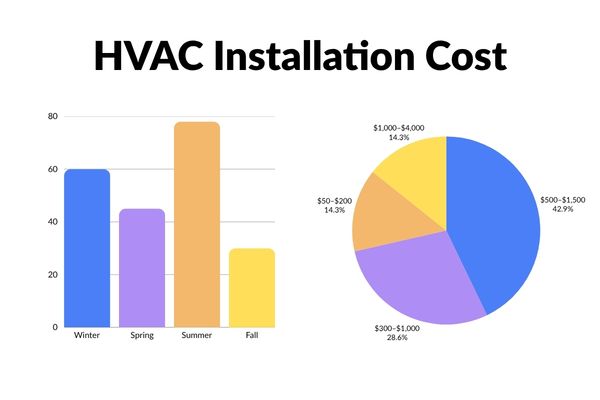
Consider installing your HVAC system during spring or fall, when demand is often lower than during the peak summer or winter months. Contractors may have more availability and may offer more competitive pricing during these periods.
3. Check for Rebates and Tax Credits
Before purchasing a new system, check for utility rebates, state incentives, and available federal tax credits. Energy-efficient heat pumps and air conditioners may qualify for incentives that can reduce your overall out-of-pocket cost.
4. Keep Good Existing Components
If your existing ductwork, electrical wiring, and other infrastructure are still in good condition, you may not need to replace them. Reusing suitable components can reduce both material and labor costs.
5. Ask About System Bundling
If both your heating and cooling equipment are old, ask the contractor about replacing them together. A matched HVAC system can sometimes cost less than installing separate systems at different times, while also providing better overall efficiency and compatibility.
6. Compare the Total Cost, Not Just the Equipment Price
The cheapest HVAC unit is not always the cheapest option in the long run. Compare the equipment price, installation labor, energy efficiency, warranty, maintenance requirements, and expected operating costs before making your final decision.
FAQ'S
How much does a new HVAC system cost?
A new HVAC system can cost anywhere from $5,000 to $12,500 or more, depending on the system type, home size, equipment efficiency, labor, and installation requirements. Complex installations with new ductwork or electrical upgrades can cost more.
The HVAC equipment is usually one of the largest expenses, often accounting for about 50% to 60% of the total installation cost. Labor, ductwork, electrical work, permits, and other materials can add significantly to the final price.
Yes. If your existing ductwork is damaged, poorly designed, or needs to be replaced, the additional materials and labor can increase your HVAC installation cost. Keeping good existing ductwork can help reduce the total project price.
In many cases, yes. If your existing ductwork is properly sized, sealed, insulated, and in good condition, it may be possible to reuse it with the new HVAC system. A professional contractor should inspect the ductwork before installation.
A new, efficient HVAC system can make a home more attractive to potential buyers because it provides reliable heating and cooling and may reduce future energy costs. However, the amount it adds to your home’s value varies depending on the system, local market, and overall condition of the property.