
When your AC is running but the room still feels warm, it’s frustrating. You hear the fan, the unit looks normal, but the cooling just isn’t there. This is one of the most common complaints people have with air conditioners, and it usually shows up at the worst possible time.
The reason “AC not cooling” becomes such a frequent issue, especially in summer, is simple. Higher outdoor temperatures put extra load on the system. Dust builds up faster, filters get clogged, gas pressure drops, and small issues that were manageable in mild weather suddenly turn into noticeable problems. In peak summer, even a slightly neglected AC struggles to keep up.
This article is for anyone dealing with cooling problems. If you’re a homeowner trying to understand what’s wrong before calling a technician, a tenant wanting to explain the issue clearly to your landlord, or an AC technician looking for a clear breakdown of causes and fixes, you’ll find this guide useful. We’ll walk through the real reasons behind poor cooling and help you figure out what to check first and when professional help is actually needed
Signs That Your AC Is Not Cooling Properly
Knowing the warning signs early can save you time, discomfort, and expensive repairs. Here are the most common indicators that your air conditioner isn’t performing as it should.
1. AC Running but Room Not Getting
Cold
What happens: The AC looks like it’s working—fans running, lights on—but the room stays warm.
Possible causes:
- Low refrigerant levels due to leaks
- Dirty or blocked condenser coils
- Faulty compressor
2. Weak or Warm Air from Vents
What happens: Air coming from the vents feels weak or lukewarm instead of cool and strong.
Possible causes:
- Clogged air filter
- Blocked or leaky ducts
- Failing blower motor
3. AC Cooling Slowly
What happens: The room takes much
longer than usual to reach the set temperature.
Possible causes:
- AC unit undersized for the room
- Low refrigerant levels
- Dirty
- Condenser or evaporator coils
4. AC Cooling Unevenly in Different Rooms
What happens: Some rooms feel cold while others remain warm.
Possible causes:
- Ductwork issues or leaks
- Blocked vents or poor airflow
- Improper insulation or overloaded AC system
Top Reasons Why AC Is Not Cooling
Understanding why your AC isn’t cooling properly helps you troubleshoot or explain the issue to a technician. Here are the most common reasons
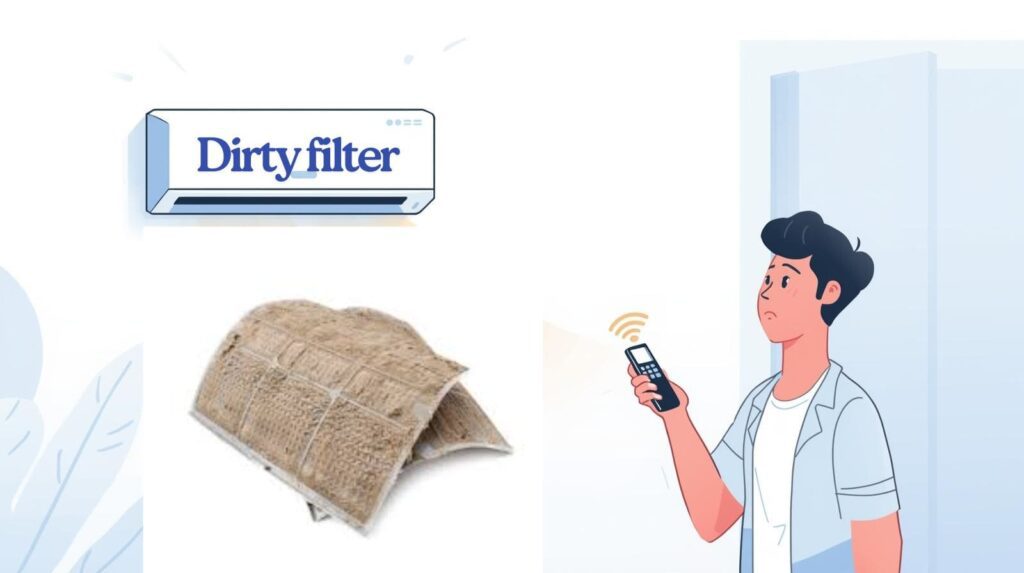
1. Dirty or Clogged Air Filter
Why it affects cooling:
- Blocks airflow, reducing the AC’s efficiency
- Causes the system to work harder, leading to weak or warm air
- Can eventually damage internal components if not cleaned regularly
2. Low Refrigerant Gas Level
Why it affects cooling:
- Insufficient refrigerant means the AC can’t absorb heat from the room
- Often caused by leaks in pipes or joints
- Low gas pressure reduces cooling performance and can damage the compressor
3. Dirty Condenser Coil
Why it affects cooling:
- Dust and debris on the outdoor coil prevent proper heat dissipation
- Makes the compressor work harder, reducing cooling efficiency
- Can lead to higher electricity bills and system overheating
4. Faulty Compressor
Why it affects cooling:
- Compressor is responsible for circulating refrigerant; if it fails, the AC can’t cool at all
- Can cause unusual noises, frequent cycling, or complete system shutdown
- Often requires professional repair or replacement
5. Thermostat Issues
Why it affects cooling:
- Incorrect settings can prevent the AC from reaching the desired temperature
- Faulty thermostats may misread room temperature, turning the AC off too soon
- Can cause uneven or no cooling despite the system running
6. Electrical or Capacitor Problems
Why it affects cooling:
- Power supply issues can prevent the AC from operating properly
- Failing capacitors may stop the fan or compressor from starting Can cause intermittent cooling or complete AC failure
AC Running But Not Cooling – What to Check First
Before calling a technician, there are a few basic checks you can do yourself. These simple steps often help identify the problem quickly and may even fix minor issues.
1. Check the Air Filter
- Remove and inspect the filter for dust or dirt
- Clean or replace if it’s clogged
- A clean filter improves airflow and cooling efficiency
2. Inspect the Thermostat Settings
- Make sure the AC is set to “Cool” mode, not “Fan” or “Auto”
- Check the temperature setting; it should be lower than the room temperature
- Replace the thermostat battery if it’s low
3. Examine the Outdoor Unit
- Ensure the condenser unit is free from debris, leaves, or obstructions
- Make sure there’s at least 2–3 feet of clearance around the unit for proper airflow
- Clean the coils if they appear dirty
4. Check the Air Vents
- Confirm all vents are open and not blocked by furniture or curtains
- Make sure airflow is even across all rooms
- Close doors in unused rooms to improve cooling efficiency
5. Look for Visible Refrigerant Leaks
- Check pipes for signs of oil stains or ice buildup
- Low refrigerant may need a professional refill
6. Observe Any Unusual Noises
- Clicking, buzzing, or rattling can indicate electrical issues or a failing compressor
AC Not Cooling in Summer – Why It Gets Worse
Summer is the time when most AC problems become obvious. Even a well-maintained unit can struggle under extreme heat. Here’s why:
1. High Outdoor Temperature
- Hotter air outside means the AC has to work harder to cool your room
- If the system is older or undersized, it may not keep up with peak summer heat
2. Increased Cooling Demand
- More people at home, more electronics, and sun-heated rooms increase the load
- Overloading the AC reduces its efficiency and slows down cooling
3. Poor Insulation or Sunlight Exposure
- Rooms with large windows or thin walls lose cool air faster
- Direct sunlight on walls or windows adds extra heat the AC must remove
4. Dust and Debris Accumulate Faster
- Summer dust, pollen, and pollution can quickly clog filters and coils
- Dirty components reduce airflow and make cooling uneven
5. Overworked AC Components
- Fans, compressors, and motors run longer in summer, leading to wear and tear
- Minor issues like low refrigerant or a dirty coil are magnified under high demand
Room-Wise AC Not Cooling Problems
Sometimes, your AC cools certain rooms well, while others remain warm. This is a common issue in multi-room homes or offices, and it usually points to airflow or system balance problems.
1. AC Not Cooling in One Room Only
Possible causes:
- Blocked or closed vents reducing airflow to that room
- Leaks or gaps in ductwork
- Poor insulation causing the room to lose cool air faster
2. AC Not Cooling Properly at Night
Possible causes:
- Temperature sensors near windows or heat sources misreading
the room temperature - Low voltage at night affecting compressor performance
- Nighttime humidity making the air feel warmer despite the AC
running
3. Uneven Cooling Between Floors or Rooms
Possible causes:
- Ducts not properly balanced for airflow
- Oversized or undersized AC for the home layout
- Heat load differences (sunlight, electronics, occupancy)
4. Rooms Far from the AC Unit
Possible causes:
- Long duct runs reduce cooling efficiency
- Insufficient fan speed or duct size for distant rooms
- Air leaks in ducts leading to loss of cooled air
AC Not Cooling in One Room Only
If you notice that your AC is keeping most of the house cool but one particular room remains warm, it usually points to airflow or insulation issues. Here’s what to check:
Possible causes:
- Blocked or closed vents: Sometimes vents are accidentally closed or blocked by furniture, curtains, or carpets, reducing airflow to that room.
- Leaky or poorly insulated ducts: Air may be escaping before it reaches the room, lowering cooling efficiency.
- Poor room insulation: Thin walls, large windows, or direct sunlight can make one room lose cool air faster than others.
- Long duct runs: Rooms far from the AC unit may get less airflow, causing uneven cooling.
- Obstructions in ducts: Dust, debris, or animal nests can partially block ducts, reducing air supply.
Tips to fix it:
- Make sure all vents are open and clear of obstacles.
- Check for air leaks in ducts and seal them if necessary.
- Use curtains or blinds to reduce sunlight heating the room.
- Consider using a fan to help circulate cool air to distant
areas. - If the problem persists, a professional technician can inspect ducts and airflow balance.
AC Not Cooling Properly at Night
Many people notice that their AC works well during the day but struggles to keep the room cool at night. This is usually due to subtle temperature, electrical, or system issues.
Possible causes:
- Temperature sensor placement: If the thermostat or sensor is near a window, electronics, or heat source, it may misread the room temperature and turn the AC off too early.
- Low voltage at night: Some areas experience a slight drop in voltage at night, which can reduce compressor efficiency and fan speed, leading to weaker cooling.
- Nighttime humidity: High humidity can make the air feel warmer, even if the AC is running correctly.
- Overworked AC components: After running all day, the compressor or fan may struggle to maintain performance during cooler nights if the system is old or not well-maintained.
Tips to fix it:
- Ensure the thermostat sensor is placed away from heat sources
and in a central location. - Use a voltage stabilizer if low voltage is common in your area.
- Keep windows and doors closed to prevent warm, humid air from entering.
- Schedule regular AC maintenance to keep all components running efficiently
DIY Fixes for AC Not Cooling
Before calling a technician, there are several simple checks and fixes you can try yourself. Many AC cooling issues can be resolved with basic maintenance or adjustments.
1. Clean or Replace the Air Filter
- Remove the filter and check for dust, dirt, or debris.
- Wash reusable filters or replace disposable ones.
- A clean filter improves airflow and allows the AC to cool more efficiently.
2. Check Thermostat Settings
- Make sure the AC is set to “Cool” mode, not “Fan” or “Auto.”
- Set the temperature lower than the current room temperature.
- Replace thermostat batteries if necessary.
3. Clear the Outdoor Unit
- Remove leaves, dust, or debris around the condenser unit.
- Ensure there’s at least 2–3 feet of clearance for proper airflow.
- Gently clean the coils if dirty, but avoid bending the fins.
4. Inspect Air Vents and Ducts
- Make sure all vents are open and unobstructed.
- Close doors in unused rooms to improve airflow to occupied spaces.
- Check for visible damage or gaps in ducts and seal small leaks with duct tape.
5. Check for Refrigerant Issues
(Visual Check Only)
- Look for ice buildup on pipes or oil stains around connections.
- Low refrigerant requires a professional refill—don’t try to add it yourself.
6. Reduce Heat Load in the Room
- Use blinds or curtains to block direct sunlight.
- Turn off unnecessary electronics generating heat.
- Use ceiling or portable fans to help circulate cool air.
7. Listen for Unusual Noises
- Buzzing, clicking, or rattling can indicate electrical issues or a failing compressor.
- If you hear abnormal sounds, stop using the AC and call a technician.
How to Prevent AC Cooling Problems
Preventing cooling issues is always better than fixing them. Regular care, proper usage, and seasonal maintenance can keep your AC running efficiently for years.
1. Regular AC Servicing
- Schedule professional servicing at least once a year, ideally before summer.
- Servicing includes checking refrigerant levels, cleaning coils, inspecting electrical components, and ensuring airflow is optimal.
- Regular maintenance helps catch small problems before they turn into costly repairs.
2. Proper Usage Habits
- Avoid setting the temperature too low; a moderate setting reduces strain on the system.
- Keep doors and windows closed while the AC is running.
- Turn off unused AC units in unoccupied rooms to save energy and reduce wear.
- Clean or replace filters every 1–3 months depending on usage and dust levels.
3. Seasonal Maintenance Checklist
- Before summer: Clean filters, check refrigerant, inspect coils, and ensure outdoor unit is clear of debris.
- During summer: Monitor airflow and cooling performance; clean filters regularly.
- Before winter: Turn off the AC properly, clean the system, and cover the outdoor unit if exposed to dust or rain.
- Regularly check vents, ducts, and thermostat functionality throughout the year
Frequently Asked Questions (FAQs)
1. Why is my AC on but not cooling?
Even if your AC is running, it may not cool due to:
- Low refrigerant levels or gas leak
- Dirty air filters or condenser coils
- Faulty compressor or electrical issues
- Incorrect thermostat settings Checking these factors can help identify whether it’s a simple fix or requires a professional.
2. How long does AC gas last?
- AC refrigerant (gas) itself does not “expire” under normal conditions.
- A properly sealed system can last many years without needing a refill.
- Gas loss usually occurs due to leaks, so if your AC isn’t cooling, a technician may need to check for leaks and refill the refrigerant.
3. Can low voltage cause AC not cooling?
- Yes, insufficient voltage can reduce compressor efficiency and fan speed.
- Low voltage may prevent the AC from reaching the set temperature, especially at night or during high electricity demand.
- Using a voltage stabilizer can help protect your AC and maintain proper cooling.
4. Is it safe to run AC when it’s not cooling?
- Running an AC that isn’t cooling puts extra strain on the compressor and electrical components.
- Prolonged use without proper cooling can lead to permanent damage and higher repair costs.
- It’s best to troubleshoot minor issues or call a technician if the problem persists.
Conclusion
AC not cooling is a common problem, especially during the hot summer months. We’ve covered the key signs, including weak airflow, uneven cooling, and slow temperature drop, along with the main causes like dirty filters, low refrigerant, faulty compressors, and thermostat issues.
Timely maintenance is essential to keep your AC running efficiently. Regular servicing, cleaning filters, checking refrigerant levels, and observing proper usage habits can prevent most cooling problems and extend the life of your system.